How Much Should You Tip at a Restaurant in the US? (2026)
You're sitting at a restaurant table after a decent meal. The server drops off the check, and you freeze. Is 18% enough? Should you go higher? What if the food was great but service was slow? If you've ever stared at a restaurant bill wondering how much to tip at a restaurant in the USA, you're not alone. Millions of diners face this exact moment every single day, and the unwritten rules keep shifting year after year.
This guide gives you real numbers, honest answers, and clear examples for every tipping situation you'll encounter at a restaurant in the US. No guilt trips. No vague advice. Just a straight breakdown from start to finish.
The Standard Tip for a Restaurant in the US in 2026
The short answer is this: 18% to 20% is the current standard for how much to tip at a restaurant in the USA for sit-down dining. The old "15% is fine" rule has shifted upward. With the cost of living rising and tipped wage structures working the way they do, 15% now reads as the floor, not the comfortable middle ground.
Here's how the percentages break down in 2026:
15%: Acceptable for basic or below-average service
18%: The new minimum for decent service at most sit-down spots
20%: The clear standard for good service
25% or more: Excellent service, special occasions, or personal generosity
Why Has the Restaurant Tipping Standard Shifted?
Tipped workers in the US earn a federal tipped minimum wage of $2.13 per hour in many states. Their tips make up the bulk of their income. With inflation hitting restaurant workers hard over the past few years, what felt generous in 2015 barely covers the gap in 2026.
Knowing how much to tip at a restaurant in the USA isn't about following a rule blindly. It's about understanding the wage system you're participating in every time you sit down for a meal.
Run the math in seconds with the free Tip Calculator at QuickConvertIO. No signup needed.
How to Calculate Your Tip Without Doing Mental Math
Most people guess or pull out their phone. Both work, but knowing the logic behind the numbers makes you faster and more confident at the table when figuring out how much to tip at a restaurant in the USA.
Three Methods Worth Knowing
Method 1: The Move-the-Decimal Trick
Move the decimal one place to the left to find 10% of your bill. Double it for 20%.
Situation: Bill = $48.00
Calculation: $48.00 x 0.10 = $4.80 (10%), then x 2 = $9.60 (20%)
Result: $9.60 tip, total = $57.60
Method 2: Round Up, Then Calculate
Round your bill to the nearest $5 or $10 before running the percentage. The math gets cleaner and the process gets faster.
Situation: Bill = $63.40, rounded to $65.00
Calculation: $65.00 x 0.20 = $13.00 tip
Result: $13.00 tip, total = approximately $76.40
Method 3: The Tax Double Trick
In states with 8%-10% sales tax, doubling the tax shown on your receipt puts you close to an 18%-20% tip. It's not precise, but it works fast.
Situation: Bill = $55.00, tax = $4.95 (9%)
Calculation: $4.95 x 2 = $9.90 tip (roughly 18%)
For exact numbers on every dining situation, the free Tip Calculator at QuickConvertIO handles the whole process instantly.
Should You Tip Before or After Tax?
This is one of the most searched questions about how much to tip at a restaurant in the USA, and the honest answer surprises a lot of diners.
Etiquette experts say you tip on the pre-tax amount. Technically, gratuity applies to food and service, not the government's cut. The practical reality is: most Americans tip on the full bill because it's simpler and slightly more generous to the server.
Here's how much the difference amounts to on a typical meal:
Situation Result $60 bill, $5.40 tax (9%), tip on pre-tax at 20% $12.00 tip Same bill, tip calculated on full total at 20% $13.08 tip Difference per table $1.08
For most diners, $1.08 is meaningless. For a server working eight-hour shifts, it adds up across dozens of tables every week. Tipping on the total is the more common and more generous approach in the US.
Common Mistake Many diners calculate their tip on the subtotal at the top of the receipt, then get confused when the suggested tip lines printed at the bottom show higher dollar amounts. Those printed suggestions are almost always based on the full total, including tax. Neither approach is wrong. Know which number you're working from before you write anything in.
Tipping Rules by Restaurant Type (Not One Size Fits All)
One of the biggest errors people make when deciding how much to tip at a restaurant in the USA is applying one percentage to every dining setting. The norms shift depending on where you eat and how the service works.
Fine Dining
Plan on tipping 20%-25% here. The service is more attentive, the staff tends to be more experienced, and the checks run higher. A $200 dinner warrants a $40-$50 tip for excellent service.
Situation: Fine dining bill = $185.00
Tip at 22%: $40.70
Total: $225.70
Casual Sit-Down Restaurants
The 18%-20% standard applies at casual spots: your neighborhood diner, a chain restaurant, or a local family-owned place. Servers handle multiple tables at once and earn tipped wages, making the standard US restaurant tip percentage a meaningful part of their income.
Fast Casual and Counter Service
This is where tipping norms in 2026 get genuinely murky. Counter-service spots now prompt for tips at checkout screens. The working guideline: 10%-15% when staff brought food to your table or handled your order with extra care. For pure counter pickup where interaction was minimal, 0%-10% is widely accepted and nobody gives it a second thought.
Buffet Restaurants
Tip the server managing your drinks and clearing your plates: $1-$2 per person in your group, or closer to 10% for attentive service throughout the meal.
Food Trucks
Tipping $1-$2 per item, or 10%-15% of your order total, is the fair approach. These operators carry high overhead with tight margins on every single order.
How Much to Tip on Takeout and Delivery Orders
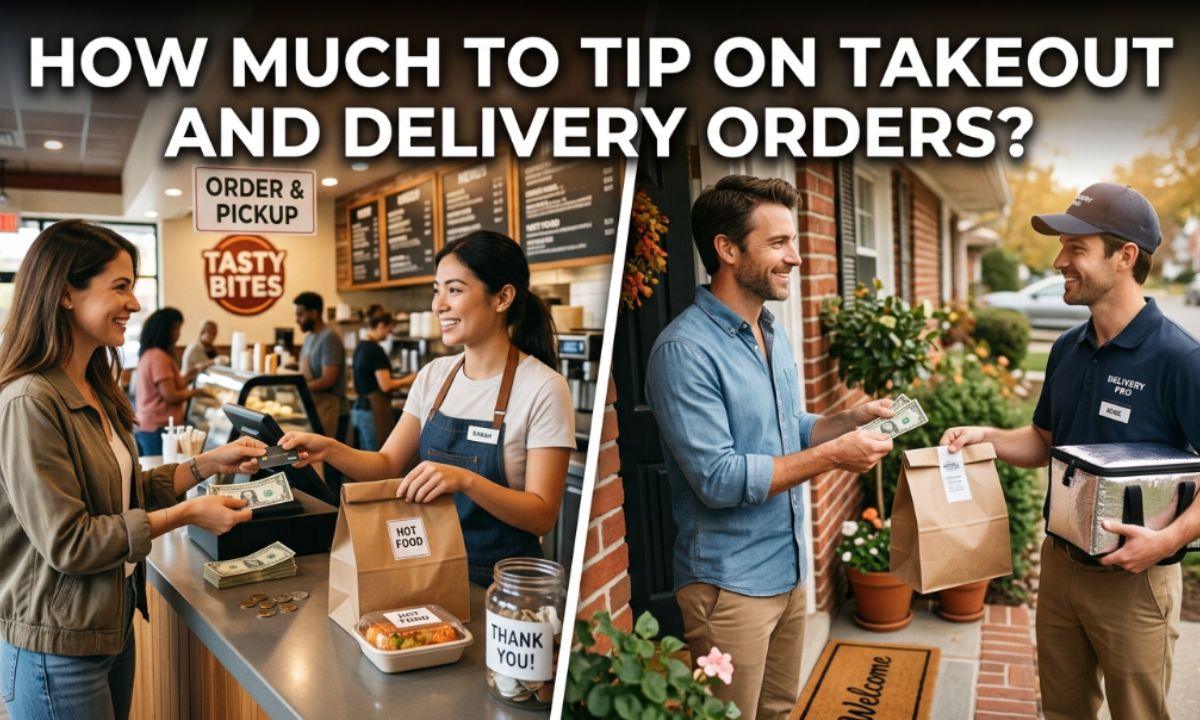
Most tipping guides treat takeout and delivery as one category. They aren't the same situation. Here's the real breakdown for how much to tip at a restaurant in the USA depending on how you receive your food.
Restaurant Takeout: You Pick It Up
Tipping on pickup orders is optional but appreciated. A 10%-15% tip is a thoughtful gesture at independent restaurants, especially when your order was large or complex. For a simple pickup at a chain location, tipping is a personal choice with no social pressure attached.
Situation: Takeout order = $35.00
Tip at 10%: $3.50
Total: $38.50
Third-Party Delivery Apps
Tip your driver 15%-20%, with a floor of $3-$4 regardless of order size. These drivers use their own vehicles, cover their own gas, and the delivery platforms take a significant cut of their earnings.
Situation: Delivery order = $22.00
Driver tip at 18%: $3.96, rounded up to $4.00
Total paid (before delivery fees): approximately $26.00
Direct Restaurant Delivery
When a restaurant uses its own delivery staff, the 15%-20% standard applies. These workers often earn tipped wages, the same as in-house servers who wait tables.
Tipping for Large Groups and Automatic Gratuity
When you dine at a restaurant in the USA with a group of six or more people, many restaurants add automatic gratuity, usually 18%-20%, directly to the bill. You'll see it listed as "auto-gratuity" or "service charge."
Here's what trips most people up: auto-gratuity is legally a service charge in many states, not a voluntary tip. The restaurant controls where it goes. You still have the option to add extra for truly exceptional service, but check the bill first.
Situation Result Group bill = $280.00, auto-gratuity at 18% $50.40 added automatically Extra tip for outstanding service Add $10-$15 on top Approximate total $340-$345
Always review your bill before writing in a personal tip at a large-group dinner. Adding a personal tip on top of an existing auto-gratuity line means you're paying twice. The free Tip Calculator at QuickConvertIO makes splitting and calculating group totals fast and straightforward.
How Much to Tip for Bad Service (Honest Answer)
Here's the thing: most tipping guides get vague right at this point. "Use your judgment," they say, and move on. You deserve a direct answer when figuring out how much to tip at a restaurant in the USA after a disappointing experience.
The first step is identifying where the problem originated:
Situation What It Means Food took too long to arrive Often a kitchen issue, not the server's fault Wrong order brought to the table Shared between server and kitchen Server was rude or inattentive Server's direct responsibility Food quality was disappointing Chef or management issue
If the server's behavior caused your bad experience, tipping 10%-15% is a fair and measured response. Leaving zero sends a message, but it also means someone served your entire meal for $2.13 an hour from their employer.
If the problem came from the kitchen or management, tip your server the standard amount. They didn't ruin your evening. When service was genuinely poor and management didn't step in: leave 10% and speak directly with management before you go. That approach is more constructive than a silent walkout and more likely to change something.
The Tip Screen Pressure Problem (And How to Handle It)
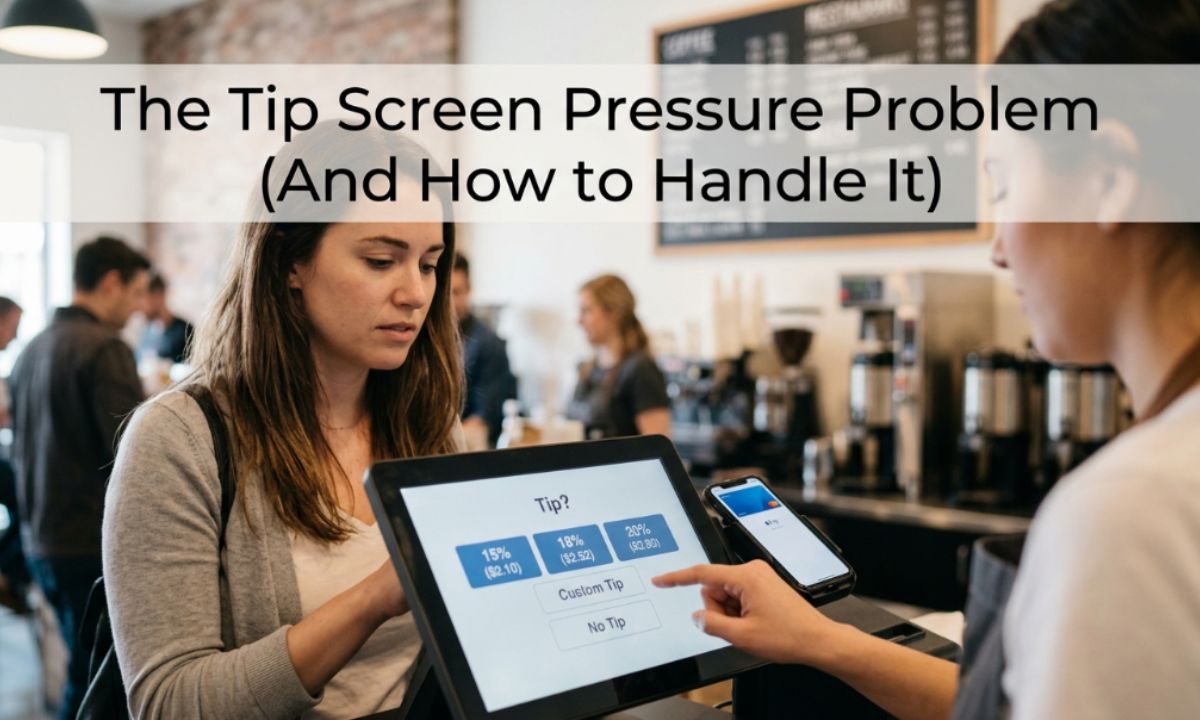
You walk up to a counter to order a coffee. The employee turns the iPad screen toward you. It shows: 25%, 30%, 35%, or Custom. You feel the eyes. The pressure hits. You tap something and move on, slightly unsure whether you made the right call.
This is one of the most talked-about US restaurant tipping dynamics right now, and it's new enough in 2026 that most guides skip over it entirely.
These screens, built into POS systems, default to higher percentages than traditional restaurant tipping norms. A 30% suggestion on a $7 coffee order is above what most people expect to pay for a standard counter interaction.
Here's how to handle it with confidence:
For simple counter orders with no table service: 10%-15% is more than fair
For orders where staff went above and beyond: 15%-18%
For basic coffee or fast counter service: tipping is optional, and declining is completely acceptable
Pressing "No Tip" doesn't make you inconsiderate. Understanding how much to tip at a restaurant in the USA across every type of setting means you make an informed choice, not a pressured one.
Frequently Asked Questions
What is the minimum acceptable tip at a US restaurant in 2026?
18% is the widely accepted minimum for sit-down service in 2026. Tipping below 15% signals dissatisfaction. Below 10% sends a strong negative signal at full-service restaurants.
Do you tip on alcohol at a restaurant?
Yes. Alcohol is part of your bill and the standard percentage applies to the full total. For bar-heavy tabs, many diners add $1-$2 per drink on top of the overall percentage tip.
Is 10% a bad tip at a restaurant in the US?
For full sit-down service, 10% communicates disappointment with the experience. For counter service, takeout, or buffets, 10% sits on the lower end of the acceptable range without causing offense.
Do international visitors have to follow US restaurant tipping customs?
Visitors aren't legally required to tip, but US servers earn as low as $2.13 per hour from their employer. Skipping a tip at a sit-down restaurant in the USA creates real financial hardship for your server. Following the 18%-20% guideline is the respectful and informed choice.
What happens if you don't tip at a restaurant in America?
Nothing legal happens. But the server who managed your table, refilled your drinks, and handled your requests earned almost nothing from the restaurant itself. In the US system, tipping isn't a bonus. It's the primary income source for most restaurant servers.
Know Before the Check Arrives
You now know exactly how much to tip at a restaurant in the USA, no matter the setting. Fine dining: 20%-25%. Casual sit-down: 18%-20%. Counter service: 10%-15% or your personal call. Delivery drivers: 15%-20% with a $3-$4 minimum. Large groups: check for auto-gratuity before adding anything extra.
The numbers aren't as complicated as they feel in the moment. Next time the server sets the check on your table, you'll know exactly what to write in and why.