Why Does the Exchange Rate Change Daily: A Complete Guide
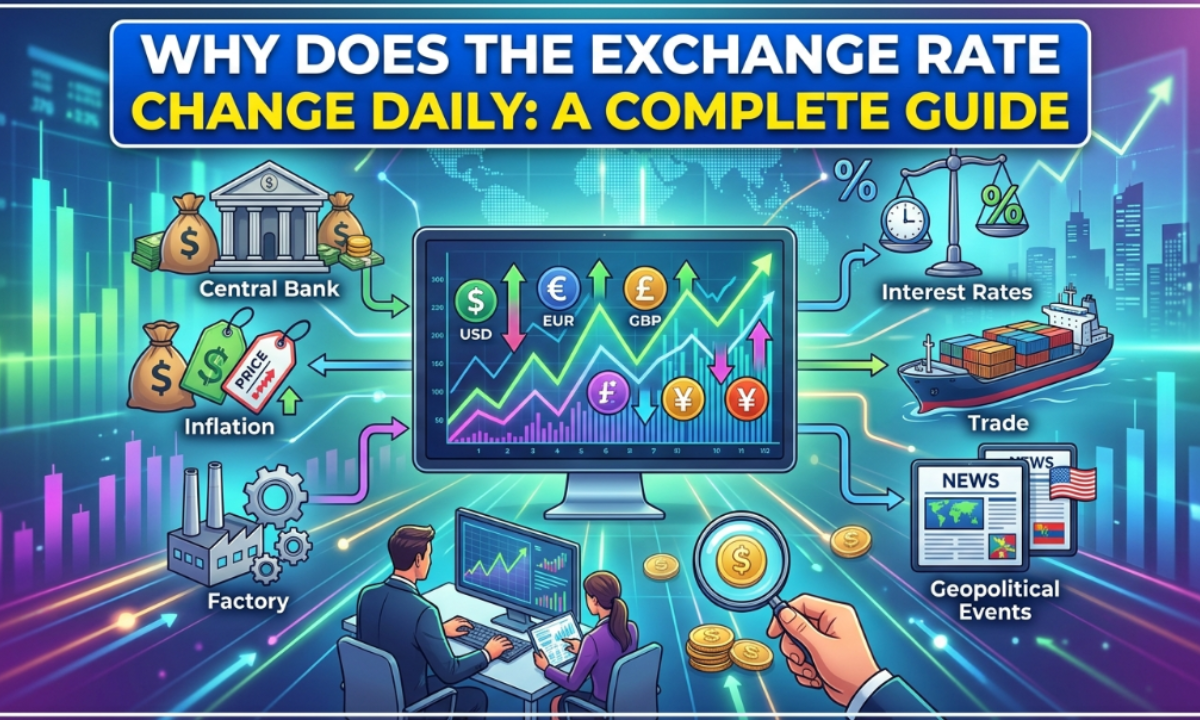
You checked the exchange rate this morning. It was 1.08. You checked it again after lunch. Now it's 1.11. Nothing changed in your life. Your bank account looks the same. The news seems quiet. So why does the exchange rate change daily like this, sometimes by the hour?
This happens to millions of people every single day. Travelers planning trips abroad. Freelancers waiting to withdraw their earnings. Families sending remittances back home. Business owners paying overseas suppliers. They all watch exchange rates shift and wonder what's driving it.
The truth is, why does the exchange rate change daily is one of the most practical financial questions you can ask. And the answer isn't complicated once you break it down. Exchange rates aren't set by one person or one bank. They're the result of millions of decisions made simultaneously by governments, investors, traders, businesses, and regular people all around the world.
Once you understand the real forces behind these daily movements, you stop feeling helpless when the rate swings. You start making smarter decisions about when to exchange, when to transfer, and when to wait. This guide covers every major factor driving daily exchange rate changes, in plain language, with real examples.
Why Does the Exchange Rate Change Daily: The Short Answer
Before diving deep, here's the short version. Exchange rates change daily because they're determined by supply and demand in a live, global marketplace called the Forex market. Over $7 trillion changes hands in this market every single day, making it the largest financial market on earth.
Every time someone buys or sells a currency, the price shifts. And with trillions of dollars moving around the clock across every time zone, those prices never stop moving.
Now let's get into the specific forces that explain why does the exchange rate change daily in more detail.
Supply and Demand: The Foundation of Why Does the Exchange Rate Change Daily
Every currency is a product. Like any product, its price goes up when more people want it and goes down when fewer people want it.
When global investors, businesses, and banks want US Dollars, they buy them. That buying pressure pushes the Dollar's value up against other currencies. When they sell Dollars to buy Euros or Yen or Pounds, the Dollar weakens.
What drives demand for a currency:
Foreign investors buying stocks, bonds, or real estate in that country
Businesses paying for imports or receiving payment for exports
Tourists exchanging their home currency for travel
Banks and hedge funds executing large trades
Governments managing their foreign reserves
When any of these activities spike or drop suddenly, the exchange rate reacts immediately. This real-time supply and demand dynamic is the core reason why does the exchange rate change daily without pause.
Interest Rates: The Biggest Single Driver
Here's the kicker. Central bank interest rate decisions move exchange rates more than almost anything else.
When a central bank raises interest rates, foreign investors rush in. They want higher returns on their savings and bonds. To invest, they need to buy that country's currency. More buyers mean a stronger currency.
When rates drop, investors pull out and move their money elsewhere. The currency weakens.
Real examples:
When the US Federal Reserve raised rates aggressively in 2022, the US Dollar hit 20-year highs against most currencies
When the European Central Bank held rates low for years, the Euro stayed weak against the Dollar
Pakistan's State Bank raising rates sharply slowed the PKR's slide temporarily
This is why financial markets watch central bank meetings obsessively. Even a hint that rates might change sends currencies moving within seconds. Interest rate expectations alone explain a massive portion of why does the exchange rate change daily.
Inflation: The Slow-Burning Factor in Daily Rate Changes
Inflation is how fast prices rise inside a country. It plays a direct role in why does the exchange rate change daily, both short-term and long-term.
Low, stable inflation tells investors that the currency holds its value. They trust it. They want to hold it. That demand keeps the currency strong.
High inflation does the opposite. When prices rise fast inside a country, the purchasing power of its currency drops. Investors avoid holding it. The currency weakens over time.
Inflation LevelEffect on CurrencyLow (1-3%)Currency stays strongModerate (4-7%)Gradual weakeningHigh (8%+)Significant depreciationHyperinflationCurrency collapse
When monthly inflation data releases, markets react instantly. A surprise inflation number higher than expected can drop a currency within minutes. That's why does the exchange rate change daily around inflation announcements.
Political Stability and Why Does the Exchange Rate Change Daily Around Elections
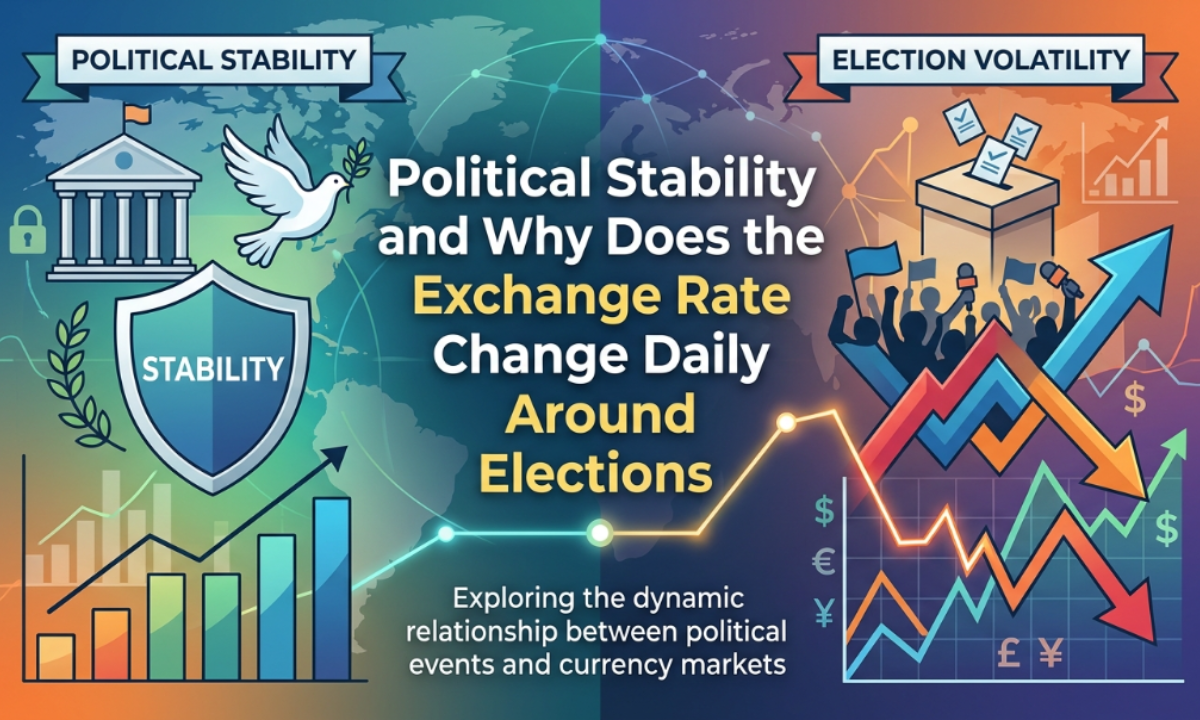
Markets hate uncertainty. Political events create uncertainty fast.
When a country faces elections, government crises, policy reversals, or geopolitical tension, investors get nervous. Nervous investors pull capital out quickly. That selling pressure weakens the currency fast.
You might be wondering: Does one election really move an exchange rate that much?
Yes. Dramatically. When Brazil elected a new president in 2022, the Brazilian Real dropped sharply within hours of early results. When the UK voted for Brexit in 2016, the British Pound had its worst single-day drop in decades. Political events are a direct answer to why does the exchange rate change daily with sudden, sharp moves.
Even rumours of policy changes move rates. If a government hints at nationalizing industries or changing trade agreements, the currency reacts before any official announcement.
Economic Data Releases
Governments and central banks publish economic reports on a fixed schedule. Traders worldwide prepare for these releases and react the moment numbers drop.
Key reports that directly explain why does the exchange rate change daily:
GDP growth data :strong growth attracts investment, strengthens currency
Unemployment reports: low unemployment signals a healthy economy
Trade balance figures :exporting more than importing boosts currency demand
Consumer Price Index (CPI) :measures inflation directly
Retail sales numbers: shows consumer spending health
The US Non-Farm Payroll report, released on the first Friday of every month, regularly moves the Dollar by 0.5-1% within minutes. That's not speculation. That's why does the exchange rate change daily in predictable patterns around known data release dates.
Market Speculation
Not every currency move ties back to hard economic data. A significant chunk of daily Forex volume is pure speculation.
Large banks, hedge funds, and algorithmic trading systems make bets on where currencies are heading. When enough big players bet the same direction, rates move regardless of underlying economic fundamentals.
This explains why you sometimes see a currency jump or fall sharply with no obvious news trigger. Sentiment shifts. A widely-read analyst publishes a bearish outlook. A large institution rebalances its portfolio. Thousands of algorithms detect a pattern and pile in.
Speculation accounts for a large part of why does the exchange rate change daily in ways that feel random but aren't.
Global Events and News Shocks
Wars, natural disasters, pandemics, oil price shocks, sanctions. Any major global event triggers immediate currency movement.
Recent examples:
Russia's invasion of Ukraine in 2022 crashed the Russian Ruble by over 30% in days
COVID-19 lockdowns in 2020 sent every major currency pair into extreme volatility
Middle East conflicts regularly shake oil-linked currencies like the Saudi Riyal and UAE Dirham
US-China trade war escalations weakened both the Yuan and currencies of export-dependent economies
When the world shifts fast, exchange rates shift fast with it. News shocks are one of the clearest real-world demonstrations of why does the exchange rate change daily, sometimes by the minute.
Trade Balances Between Countries
A country's trade balance is the gap between what it exports and what it imports.
When a country exports more than it imports, foreign buyers need its currency to pay for those goods. That steady demand strengthens the currency over time.
When a country imports heavily, it constantly buys foreign currencies to pay overseas suppliers. That outflow weakens the home currency gradually.
Example: Germany's massive trade surplus has long supported the Euro's strength. Countries with persistent trade deficits often see slow, steady currency depreciation over years.
Trade balance data doesn't move exchange rates in a single day the way interest rate decisions do. But it's a consistent background force in why does the exchange rate change daily when monthly trade data releases.
How Daily Exchange Rate Changes Affect Real People
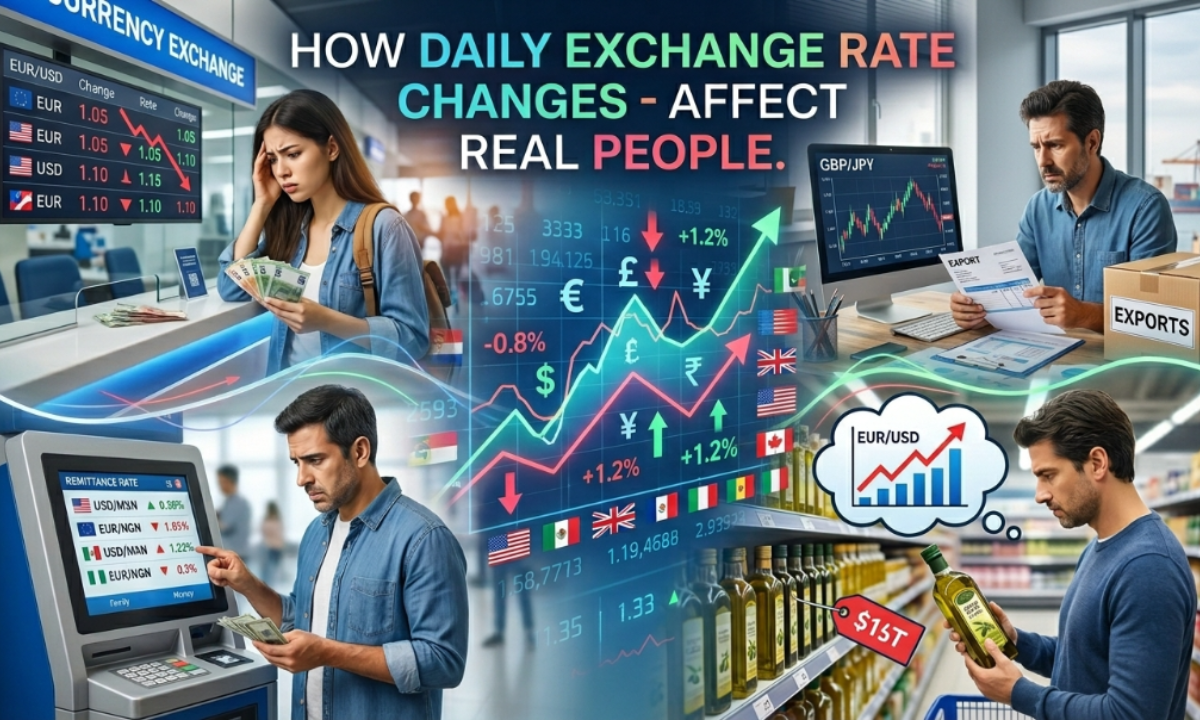
Understanding why does the exchange rate change daily matters most when it hits your wallet. Here's how daily rate movements affect different people:
Travelers: A 5% rate swing on a $3,000 trip means $150 more or less in your pocket. Booking and exchanging when your home currency is strong saves real money.
Freelancers earning in foreign currency: If you earn in USD and spend in PKR, a stronger Dollar means significantly more local purchasing power. Timing withdrawals around favorable rates adds up over a year.
Families sending remittances: Millions of people send money home from the US, UK, UAE, and Saudi Arabia. Checking rates before transferring, even waiting 24-48 hours, often means the recipient gets noticeably more.
Importers and small businesses: A weaker home currency makes every imported product more expensive. That cost pressure usually lands on consumers through higher prices.
Students studying abroad: Tuition and living expenses in a foreign currency become more expensive when your home currency weakens. Budgeting for rate fluctuations is essential.
Does the Exchange Rate Change on Weekends?
The official Forex market closes on Friday evening and reopens Sunday night. Banks and major institutions don't actively trade on weekends.
But here's what actually happens: news, political events, and economic developments don't pause on weekends. When markets reopen Monday morning, rates adjust rapidly to everything that occurred over the weekend. Monday opens are often volatile for exactly this reason.
Cryptocurrency markets run 24/7, so those rates shift even on weekends. Traditional fiat currencies don't move officially, but they catch up fast when institutional trading resumes.
How to Track Why Does the Exchange Rate Change Daily for Your Transactions
Knowing the theory helps. Tracking live rates helps more. Here's what to use:
Free tools:
A real-time currency converter showing live mid-market rates
Rate alert tools that notify you when a target rate is hit
Historical rate charts to identify trends before large transfers
One critical note: Never use your bank's quoted rate as a reference for the real exchange rate. Banks add a 2-5% margin on top of the actual mid-market rate. That markup is pure profit for them and a direct cost to you.
The mid-market rate, the one you see on a reliable currency converter, is the real rate. Always compare that to what your bank or transfer service offers before committing to a large transaction.
Final Thoughts
Why does the exchange rate change daily? Because the global economy runs 24 hours a day across every time zone. Supply and demand, interest rates, inflation, political stability, economic data, speculation, news events, and trade balances all push and pull currencies simultaneously, every single day.
You don't need to become a Forex trader to benefit from understanding this. You just need to know enough to make smarter decisions. Check live rates before transferring money. Set alerts for rates you're targeting. Understand that bank rates include a markup. Time large exchanges when your home currency is strong.
Use a reliable currency converter to check live rates before any transaction that matters to you.
Try Our more Tools Also
Land Area Calculator